
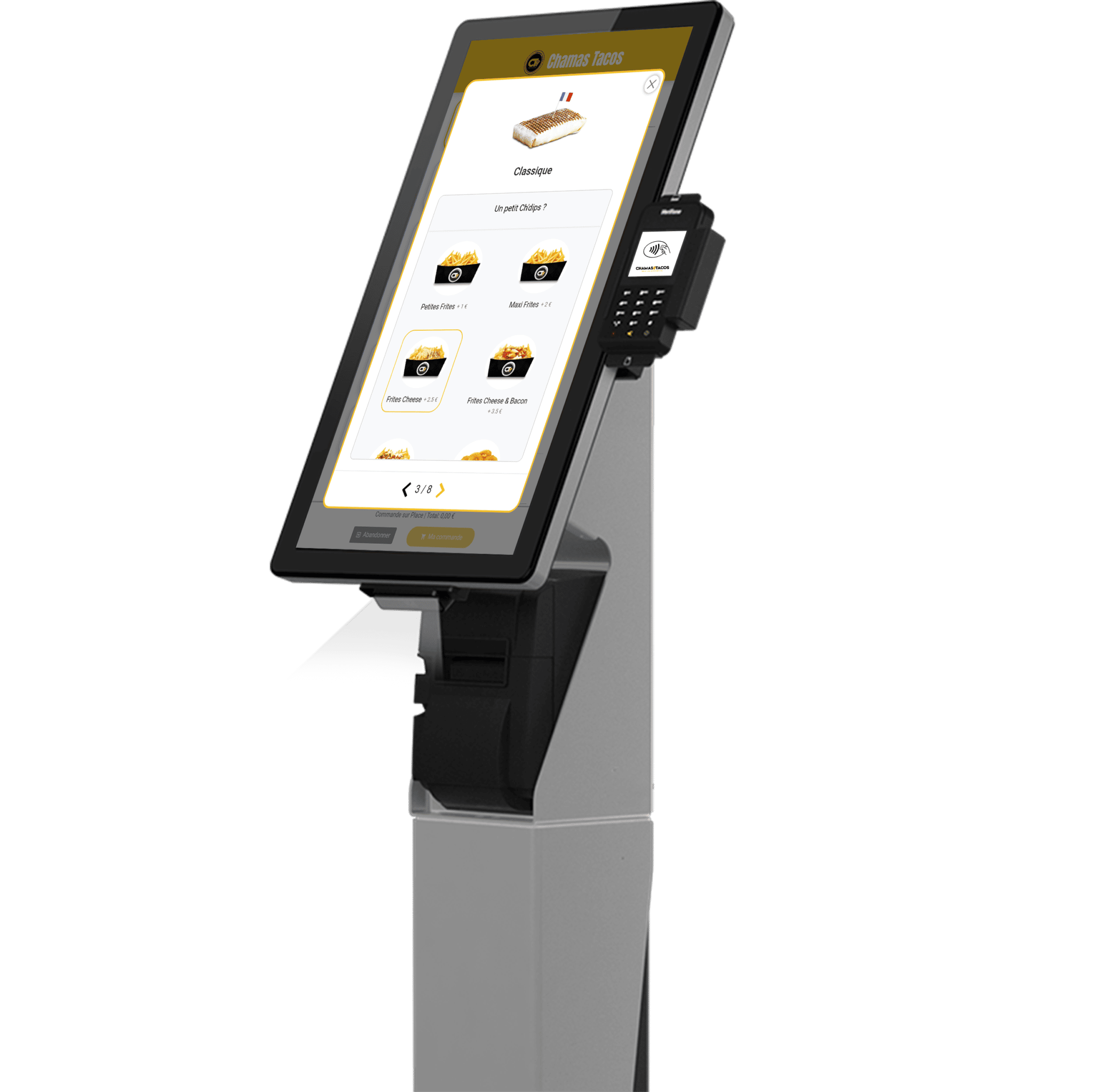
Screen, durability, connectivity: what sets a good kiosk apart from a disappointing one
Not all order kiosks are equal. Beyond the software, the choice of hardware has a direct impact on day-to-day reliability and on the customer experience.
Resistance to intensive use
A kiosk installed in the dining room or at the entrance of a restaurant is used continuously, sometimes for hundreds of orders a day. It must withstand intensive touch use without slowing down or malfunctioning.
"Our old kiosk used to crash whenever it got busy, that's no longer the case."
A restaurateur who switched order kiosks
Seamless payment and till integration
A high-performing kiosk that’s poorly connected to the till creates more problems than it solves. The Xpos One kiosk is designed to send every order directly to the unTill till, with no intermediate step.
- Touchscreen built for intensive use in the dining room
- Payment integrated directly on the kiosk
- Direct transmission of orders to the unTill till
A choice made with horeca in mind
A kiosk designed for the restaurant trade takes into account the real constraints of service: speed, reliability, and simplicity for customers who sometimes only use it once.